Build Customer Service Chatbot with AI 2026
Step-by-step guide to building a 2026 customer service chatbot that combines text replies with cloned voices and lip-synced avatars using specific Flixly models and exact credit costs.
TL;DR
An AI customer service chatbot processes queries with a language model then routes replies to TTS or lip-sync video. Use Gemini 3.1 Flash TTS for low latency, Voice Cloning for brand voice, and a fixed-seed AI Avatar for visual consistency. Follow the eight-step workflow above to reach a working prototype in one afternoon.
An AI customer service chatbot handles user queries through text or voice without human staff on every interaction. It is not a full replacement for complex support cases that need empathy or escalation.
Under the hood the system combines a language model for intent detection with separate generators for audio and visual output. You feed a prompt plus conversation history into the model, then route the reply text to a TTS engine or voice clone.
Inputs are usually a user message, customer profile data, and any attached image. Outputs include a text reply, a 15-second voice clip at 48 kHz, or a short lip-synced avatar video.
Real workflows include e-commerce order status bots, SaaS onboarding flows, and telecom bill inquiries. One team replaced 40 percent of tier-one tickets by routing the first message through a cloned voice that answers in under two seconds.
Choosing the right models
Pick models that match the output format you need. Gemini 3.1 Flash TTS produces low-latency speech in 30 languages. Pair it with Voice Cloning when you want the brand voice to stay consistent across calls.
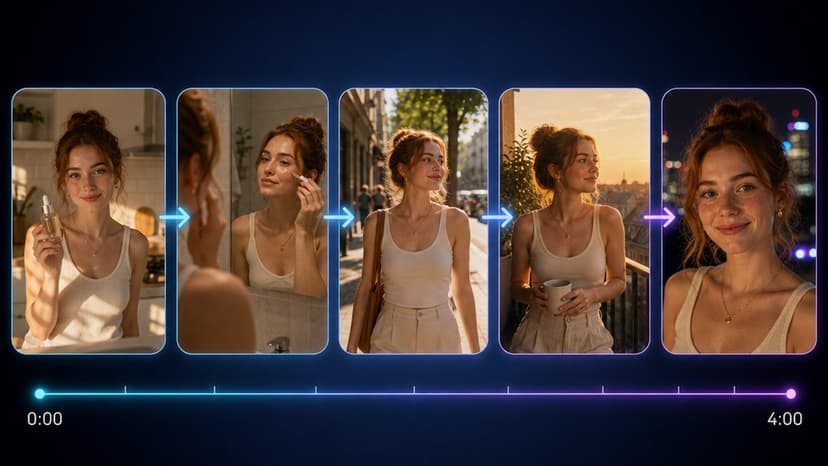
For visual replies, generate an AI Avatar once, then reuse the same character in every response. When the bot needs to show motion, feed the avatar into Lip Sync Video with the generated audio.
Concrete inputs and outputs
- Text prompt: 120–180 tokens
- Reference audio for cloning: 60 seconds minimum
- Output voice clip: 8–30 seconds
- Avatar image: 1024×1024 PNG
- Lip-sync video: 1080p, 24 fps, H.264
Step-by-step build
- Create a Flixly account at the sign-up page and purchase a credit pack.
- Record 60 seconds of clean brand voice and upload it to the voice cloning tool.
- Generate a consistent avatar image at 1024×1024 and save the seed.
- Write the core prompt that includes your FAQ data and tone rules.
- Connect the language model output to the Text to Speech endpoint using the cloned voice ID.
- Route the audio file into Lip Sync Video with the saved avatar.
- Test the full loop with five real customer questions and adjust temperature to 0.3 for factual answers.
- Deploy the webhook that returns the final video URL or audio file to your chat widget.
Comparison of output formats
| Format | Latency | File size | Best for |
|---|---|---|---|
| Voice only | 1.2 s | 180 KB | Phone support |
| Avatar video | 4.8 s | 2.4 MB | Website widget |
| Text + captions | 0.6 s | 12 KB | In-app chat |
Where to start
Begin with a single cloned voice and a short FAQ set inside the Text to Speech tool, then expand to video replies once the text flow is stable.
Frequently Asked Questions
How many seconds of audio do I need to clone a voice that passes as human on a support call?▾
Sixty seconds of clear speech recorded in a quiet room is the minimum the model requires. Shorter clips produce noticeable artifacts on certain phonemes.
Can I generate a new avatar for every reply without breaking character consistency?▾
No. Lock the seed value after the first generation so the face and clothing stay identical across all outputs.
What happens if the language model gives an answer outside the approved FAQ set?▾
Set temperature to 0.2 and add explicit “only answer from the following list” instructions in the system prompt to reduce drift.
Does the lip-sync tool accept 48 kHz audio?▾
It resamples internally to 16 kHz for the mouth movement model, so start with 48 kHz and let the pipeline handle conversion.
How many credits does a 20-second lip-synced reply typically cost?▾
The app quotes the cost of one generation up front when using the default 1080p setting and the Kling 3.0 backend.