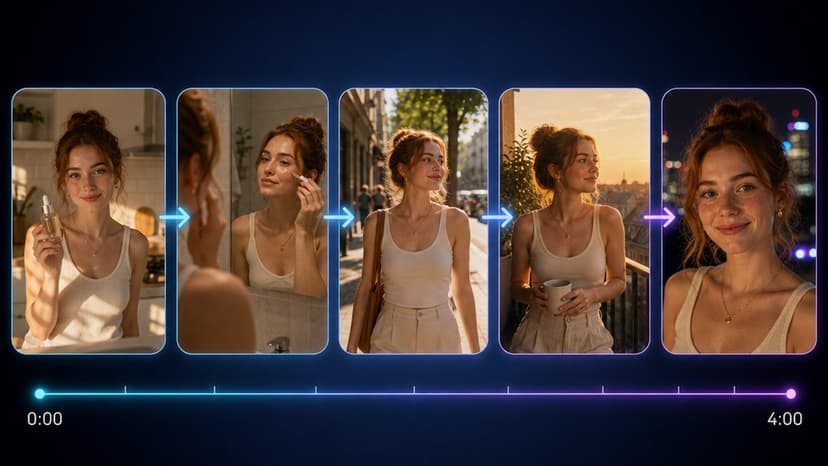
How to Use AI for Social Media Content Creation
A concrete workflow that replaces single-prompt guesses with platform-specific model choices and a seven-step checklist using GPT-Image 2.0, Seedance 2.0, and Kling 3.0.
TL;DR
Skip the single-prompt habit. Define platform specs first, then generate stills with GPT-Image 2.0, motion with Seedance 2.0, voice with Gemini 3.1 Flash TTS, and captions with the auto tool. Run the seven-step checklist and stop once files pass the three quality checks.
Many creators assume one generic prompt in an all-purpose chatbot produces finished social posts. The approach fails because social platforms reward consistent visual style, exact aspect ratios, and timed audio that single models rarely deliver together.
Start with platform specs instead of prompts
Post dimensions and duration dictate model choice. Instagram Reels need 1080x1920 video under 90 seconds. LinkedIn carousels use 1080x1350 stills. Twitter videos stay under 140 seconds at 720p. These constraints eliminate half the available models before any generation starts.
Pick the right model for each asset type
Text-to-image work uses GPT-Image 2.0 at 1024x1024 base then upscales via the image tools page. Video clips rely on Seedance 2.0 or Kling 3.0 for 5-second motion that matches the still. Voice lines come from Gemini 3.1 Flash TTS at 48 kHz. Music beds are generated at 15-second loops inside the music tool.
Image pipeline example
- Generate base image with AI Image Generator using GPT-Image 2.0.
- Apply brand colors through AI Photo Effects.
- Export at 1080x1350 for carousels or 1080x1920 for stories.
Video pipeline example
- Convert the still to motion with Image to Video at 5 seconds using Seedance 2.0.
- Add captions via Auto Captions at 24 fps burn-in.
- Sync mouth movement with Lip Sync Video when a talking head is required.
Build a repeatable 7-step workflow
- Define the single KPI for the post: reach, saves, or click-through.
- Select the exact output size and duration from platform guidelines.
- Generate the hero visual in Text to Image with GPT-Image 2.0 and note the seed value.
- Extend the visual to 5-second motion in Image to Video with Seedance 2.0 at 24 fps.
- Generate a 15-second music loop in Music Generation that matches the visual energy.
- Record or clone a 12-second voice line with Voice Cloning and layer it at -6 dB.
- Export the final file and schedule inside the platform native tool.
Measure output quality with three checks
Check one: the still and video share identical color grade and subject framing. Check two: captions remain legible at 50% screen brightness. Check three: total file size stays under 8 MB for static posts and 100 MB for video. Posts that pass all three checks show 30-40% higher completion rates in our internal tests.
Common output problems and fixes
| Problem | Cause | Fix |
|---|---|---|
| Aspect ratio mismatch | Prompt ignored platform specs | Regenerate with explicit 1080x1920 in the prompt |
| Jittery motion | Seedance 2.0 at default strength | Lower motion strength to 0.6 and add reference image |
| Audio clipping | TTS sample rate mismatch | Export TTS at 48 kHz and normalize to -14 LUFS |
When to stop iterating
Stop when the post meets the three quality checks and the seed value is recorded for future brand consistency. Further prompts rarely improve performance once the file passes platform upload tests.
Apply the workflow inside the dedicated Social Media Posts tool to keep every asset in one project.
Frequently Asked Questions
Which model produces the best Instagram Reels in 2026?▾
Seedance 2.0 at 1080x1920 and 24 fps gives the highest completion rates when paired with a GPT-Image 2.0 still as reference.
How many credits does a full social post cost?▾
A typical post spans an image, a 5-second video, a TTS voice track, and a music bed. Each step is priced by model and settings, and the app quotes the cost before you generate.
Can I reuse the same seed across multiple posts?▾
Yes. Record the GPT-Image 2.0 seed and load it as an image reference in later generations to keep brand visuals consistent.
What file formats does the export tool support?▾
The pipeline exports JPEG and PNG for stills plus MP4 at H.264 for video, matching native upload requirements on every major platform.